
This is a detailed algorithm of my own constraints for myself when trading False Breakout.
I am writing this in an accessible language so that other people can understand. If I was writing it for myself alone, it would be very hard to understand for someone who hasn't spent time studying Technical Analysis.
False Breakout
False Breakout happens relative to the level. In other words - against the level. Its not something that is happening all the time in any given instrument, but it is happening quite often in the market at large.
A good video on this from G himself: https://www.youtube.com/watch?v=Ywcmmfw9RBY
Its not just a liquidity sweep.
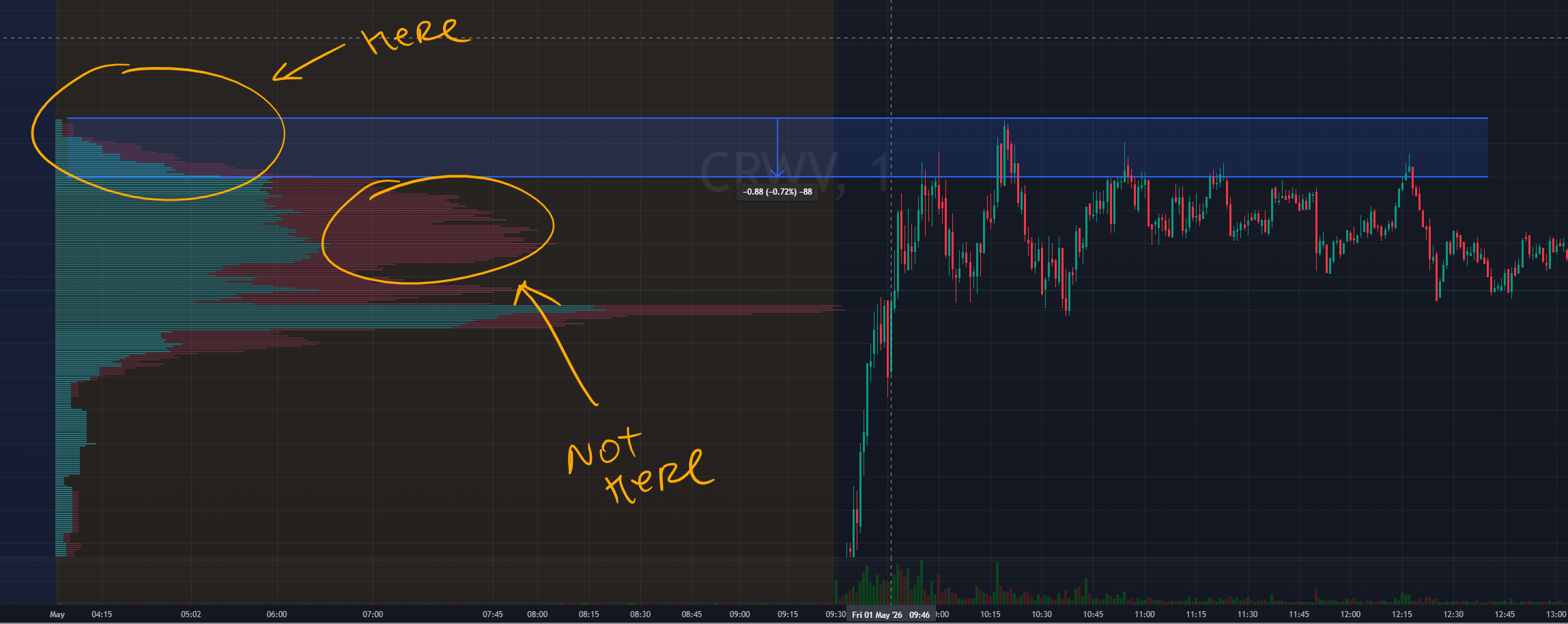
In modern vernacular there is sometimes called liquidity sweep. But additionally, its not the liquidity that the whale desires most, its to protect their position or their consolidation channel. Volumes are on an extreme low end around this event, if you were to look at Volume Profile (see that explained here), which means whales are not building bulk of their positions at "liquidity sweep" events.
Another reason they trigger stops is to shake off build-up of small traders around "support" levels so when they take the price further, we (the remoras) are not there slowing down price action with our profit taking.

As of the moment of writing this I only trade select instruments of extremely large volumes (like MARA, INTC, META etc.).
There are a lot of False Breakout opportunities out there every day. Even on bad market days. I've not seen a single day where there was not at least several clear False Breakouts in my limited list of instruments.
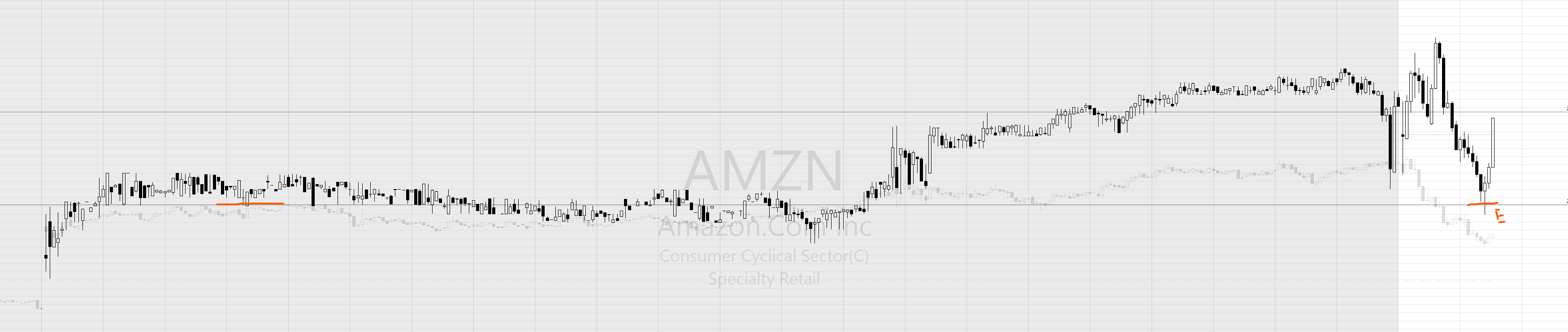
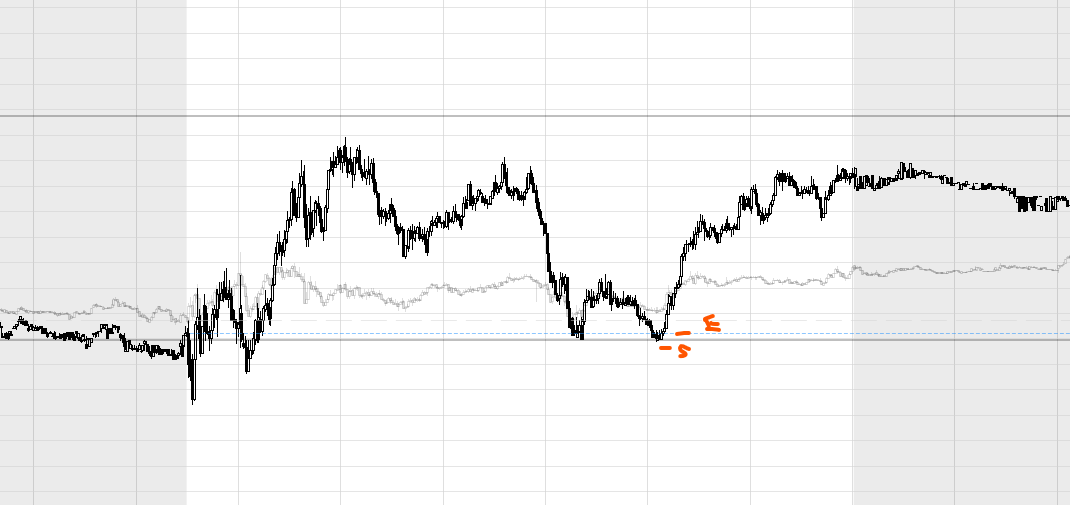
Levels
Levels in context of this system is a strict reference to limit orders placed by institutional players that can affect the price of an instrument. Levels are not arbitrary lines, they are very deliberate price points where a trader suspects limit order or extreme end of the whale position building zone sits.
A whale will often temporarily turn off their limit order and let the price go past their limit, only to turn it back on and "sweep" the resulting stops.
We see levels, we don't look for them
Levels should be obvious and not forced by rationalizations or wishful thinking. If there is no level, there is no level.
Do not look for a level where it doesn't exist.
Points of Level Formation
Levels are established by repeated hits into the same price. Sometimes pennies apart, often precise to a penny.
The concept of LEB (Level Establishing Bar), LCB (Level Confirmation Bar) should be a silent obvious here.
Levels are established at:
- Open, Close price
- Gap open price
- Intraday extreme price (not necessarily HOD or LOD)
- New Extremes
- Resistances (with false breakouts against them)
- Pre-market (where algo limit orders are clearest)
- Player Switch events (see glossary)
- See Saws (but here levels are often found in the middle of the See Saw)
Levels are not established by:
- Middle of the channel consolidations
- Middle of Low Velocity moves
- Toxic zone extremes
- Mid move short term corrections
- Candles that do not reflect any kind of limit order presence (i.e. random)
Trade Only Strongest Levels
Do not under any circumstances, enter into weak setups with hopes or maybes.
Enter only into setups that look like they cannot fail.
Even those setups will sometimes fail, but weak setups fail far more often.
Characteristics of a Strong Level
Level is established previously in the day, post/pre market session, or historically in previous trading days (Global Level).
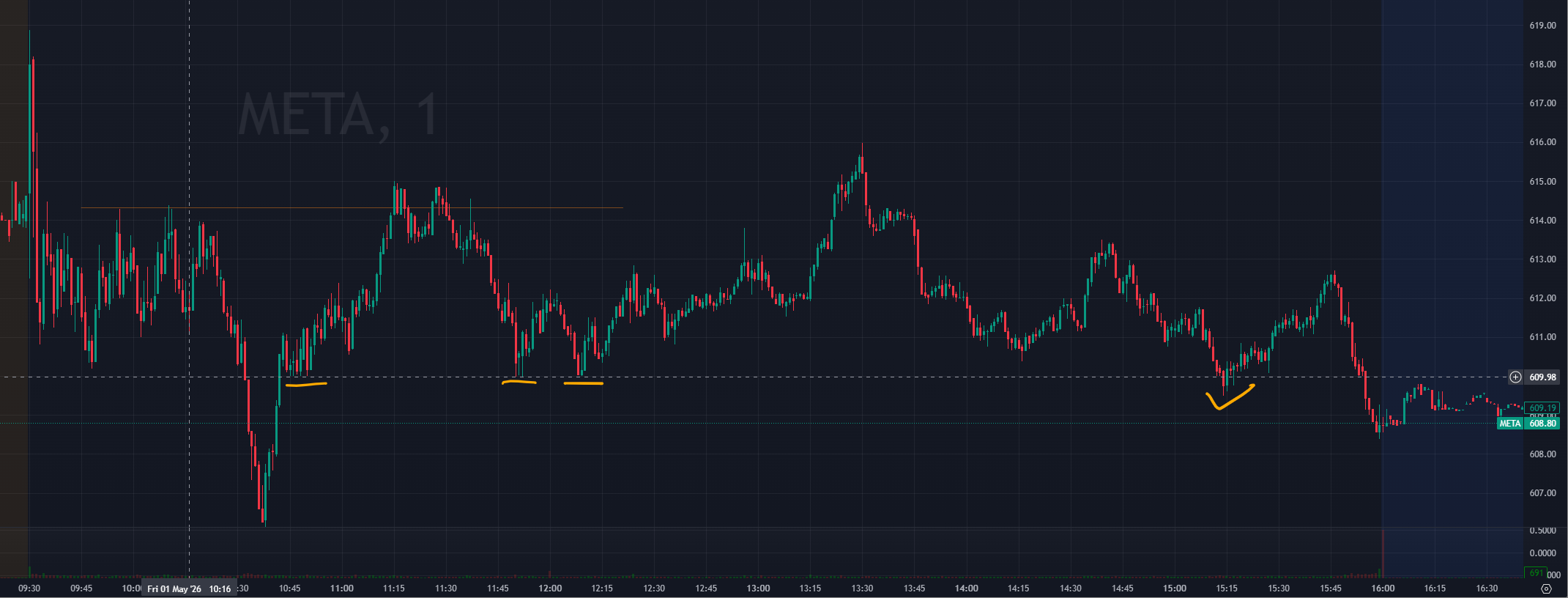
Mirror Level is the strongest of these setups.
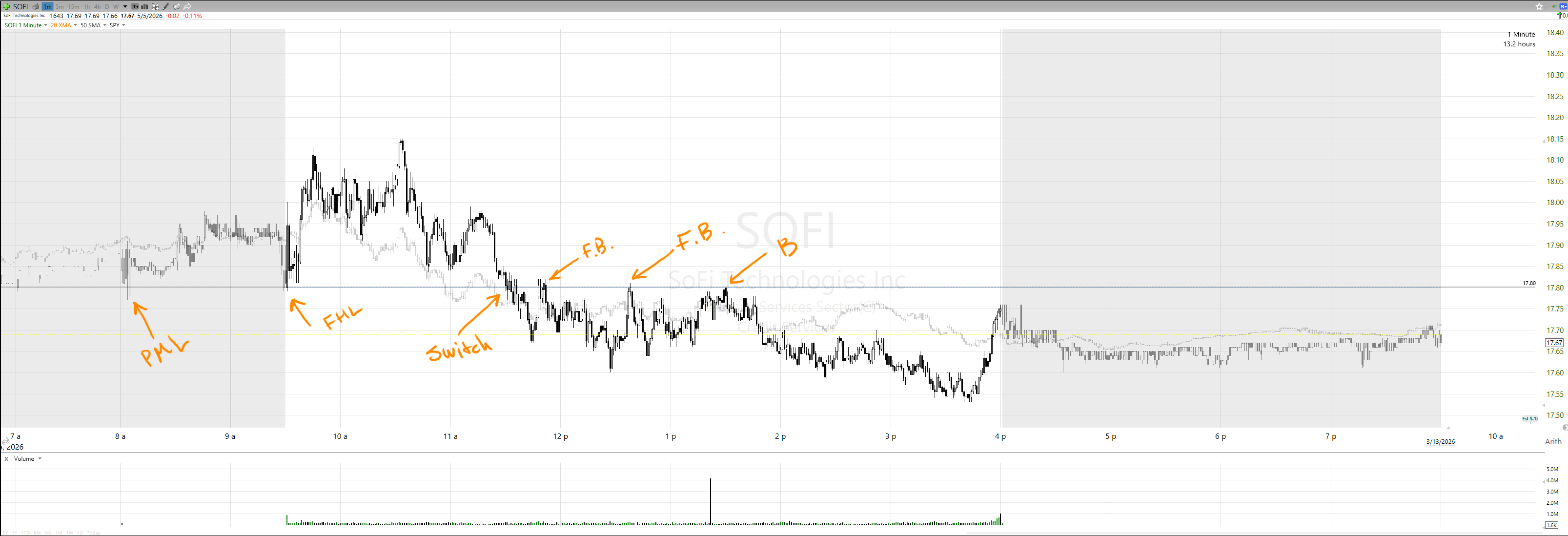
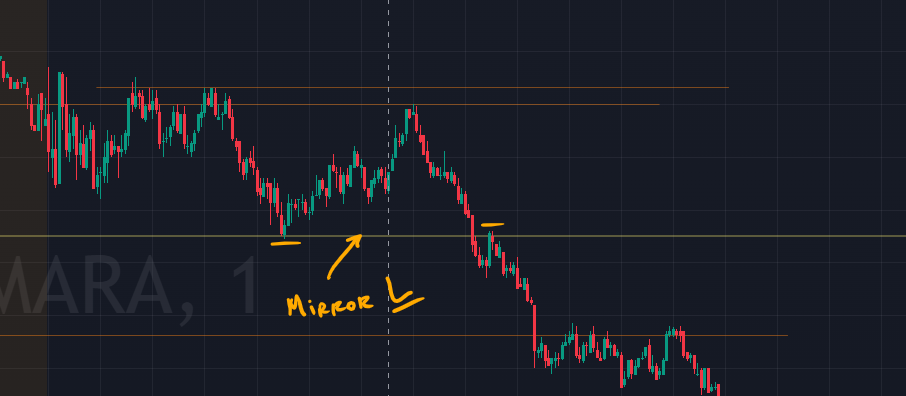
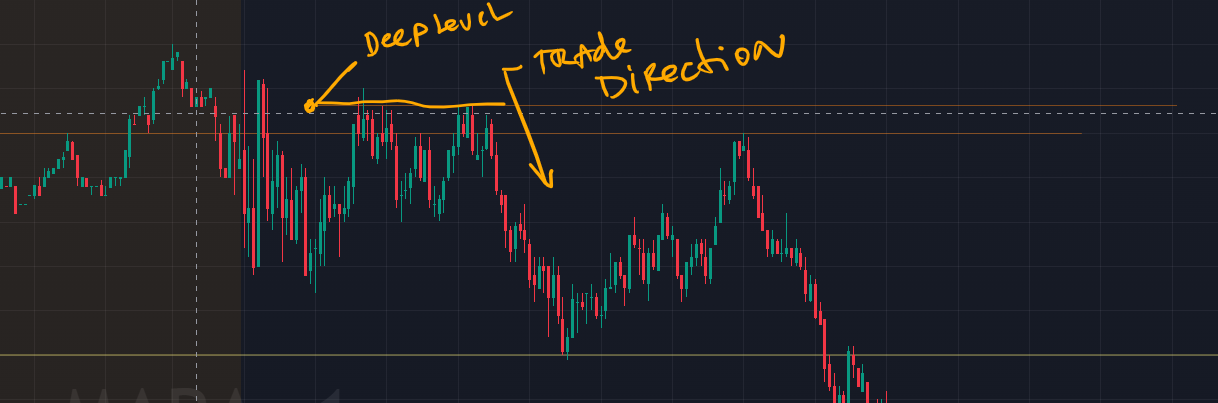
When presented with several levels close to each other, choose the deeper level (in the counter-direction of your trade). So for instance: When going long, choose lower level for your F.B entry out of the two.
Velocity
For F.B to be effective only high velocity scenarios are considered.
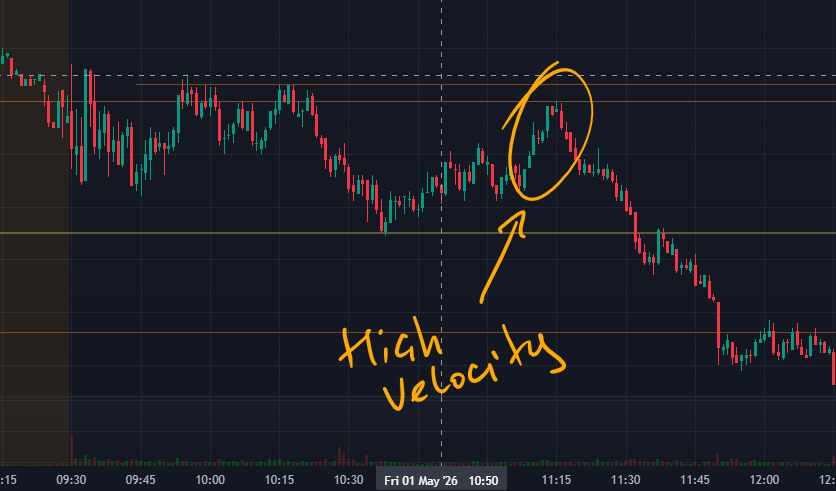
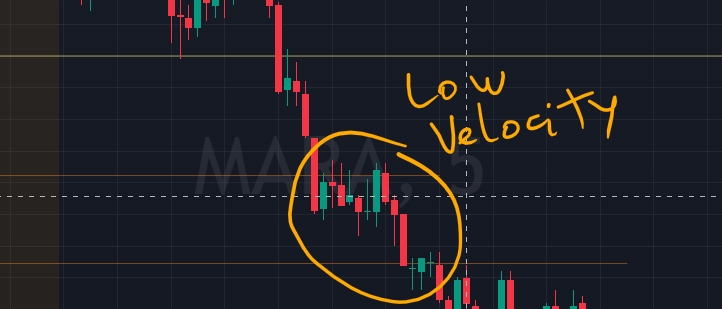
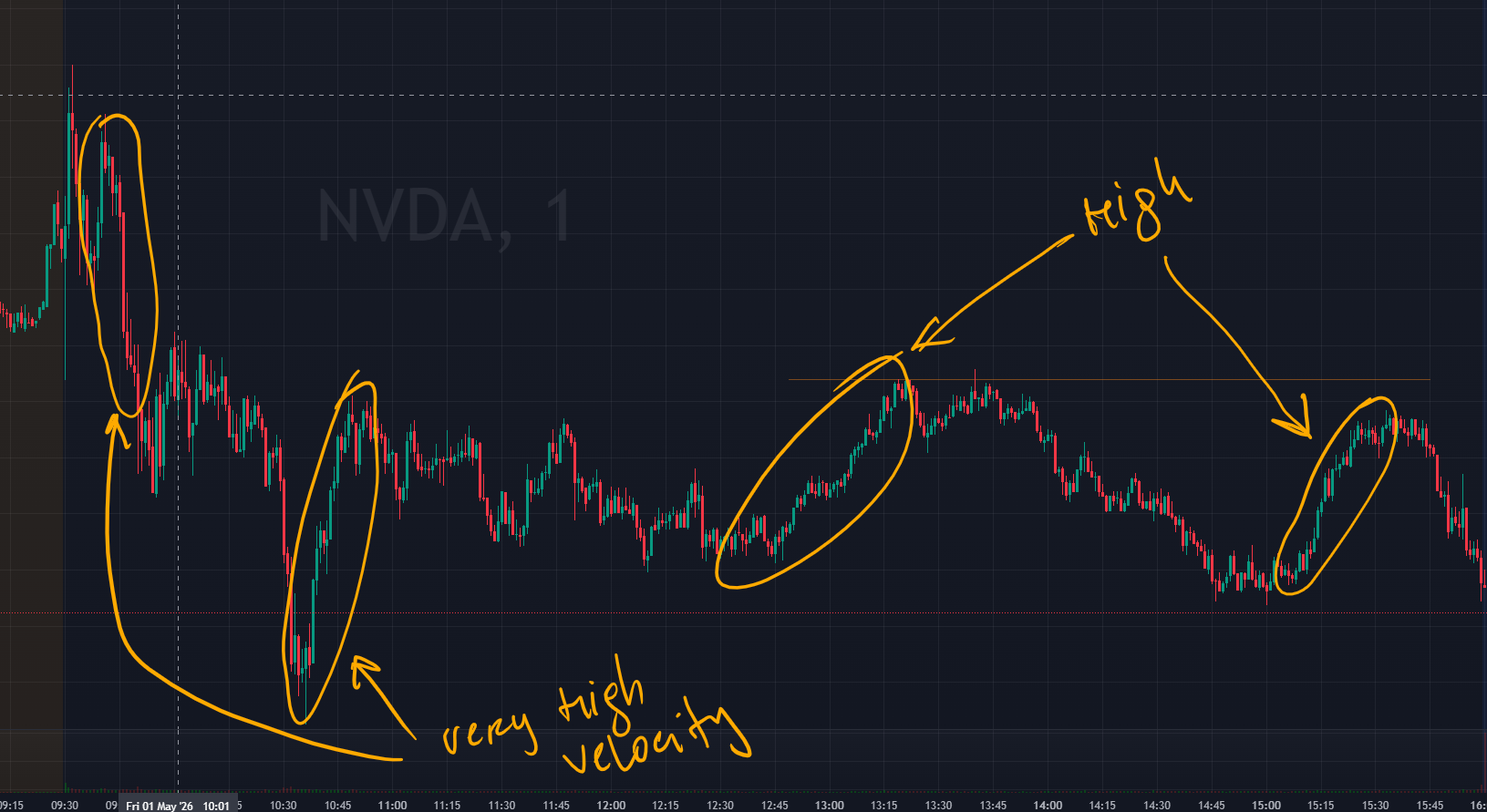
- Very High Velocity moves contain almost no opposing direction bars.
- High Velocity moves are can contain 25% or so opposition direction bars.
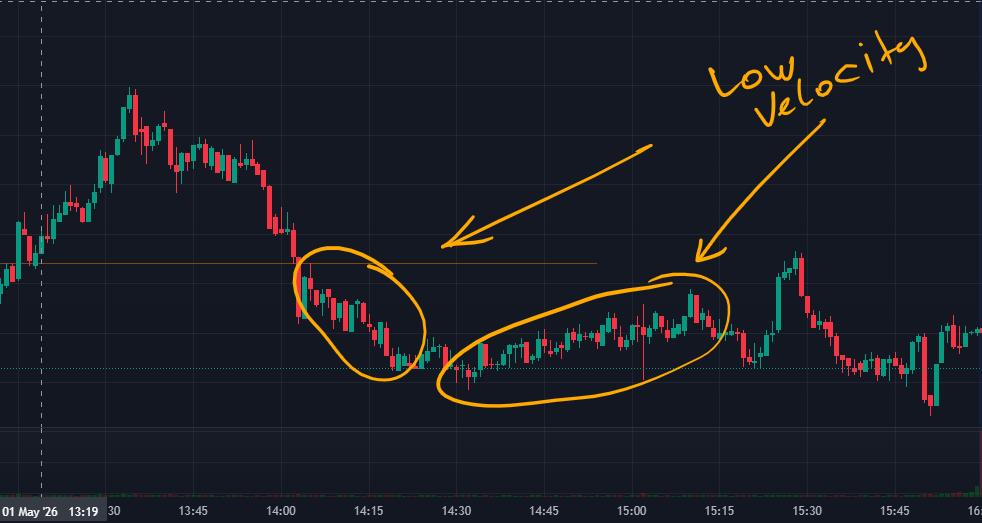
- Low Velocity moves are 50/50%
Bar Expansion
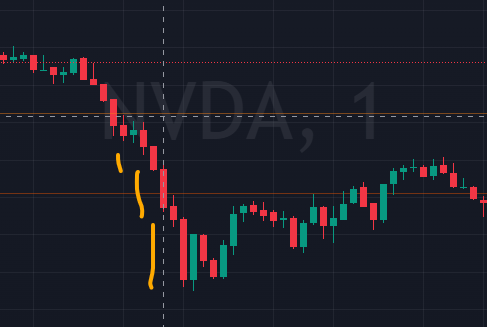
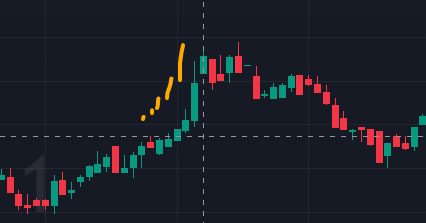
Bar expansion is a strong premise for upcoming reversal. This means, bars gradually become bigger as they approach the level, not smaller
Entry Rules
This F.B system assumes no trading in first half hour to an hour. Trading range starts at 10:30 with Hot Zone lasting until 11:30
Skip first 45 min.
Then trader is glued to the screen looking for opportunities, as biggest moves happen at this time range.
Rules:
- Only enter into a setup against a strong level
- Only enter on Very High or High velocity setups
- You have to see some Bar Expansion in price approach to the level
- Small Bars -> Big Bars expansion.
- Small Bars -> Big Bars -> Small Bars is ok too.
- Set your entry up on 1m chart, but watch 5m chart for activation
- False breakout takes place within 2 5m bars, if its more than 2 bars its no longer False Breakout - its See Saw.
- Trader enters during 2nd bar only, as it crosses the level in direction of reversal.
- Upon entry, if you see no counter move with high velocity within following 10 1m bars, exit the trade
- Upon price moving in your direction at least 1 Stop (or less if velocity is high), move the stop into lossless position.
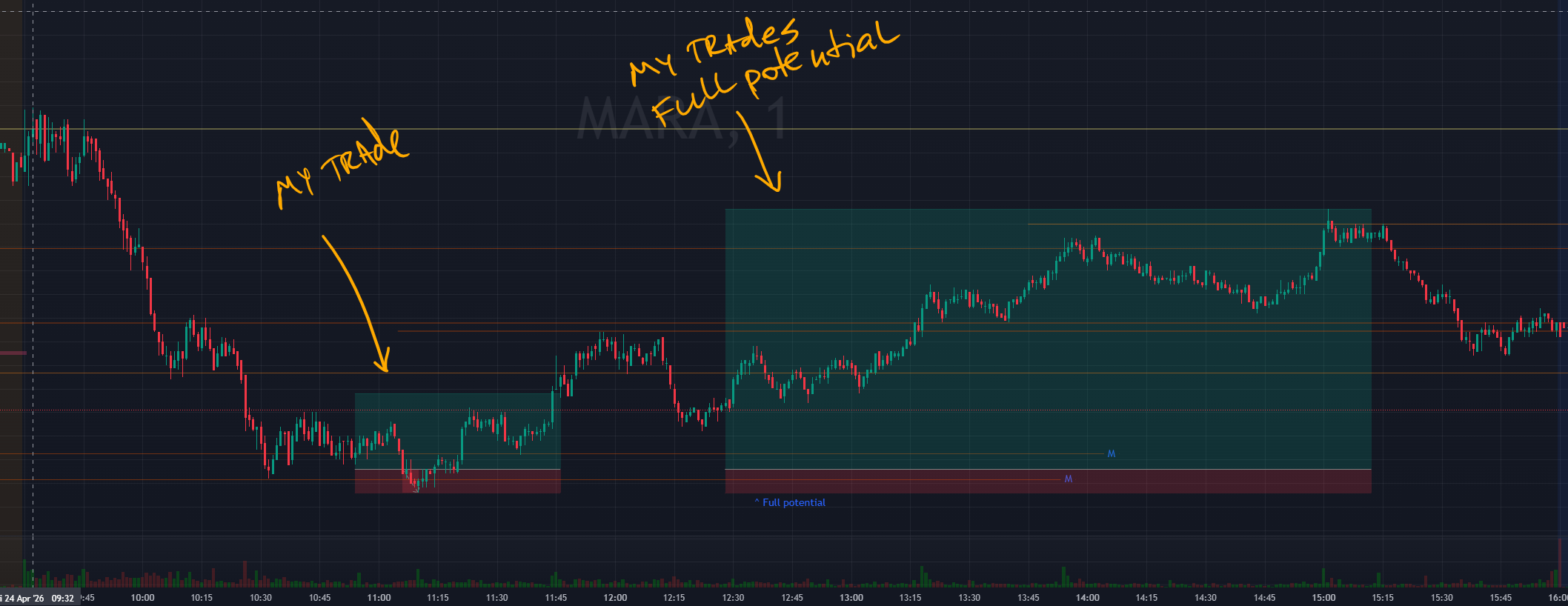
- LET IT RUN
Personal note: I've taken 2, 3, 5 stop moves that ended up being 10, 20, 50 stop moves later. It is not worth it to exit early. Move lossless and wait for a 10x.
Direction
Its possible to trade against market direction when instrument is weaker/stronger than the market. But in general, trading in the direction of the market, amplified by trading in an instrument that is also exceeding that direction will yield highest returns.
Stops
There are no trades without stops. Stops do not move to increase risk, they only move to remove risk. That means, you never move the stop to increase your stop size, only to reduce it.
As of writing this, I slayed this demon long time ago, but if you haven't, trade with small risks 2-5 bucks, and eat shit for a while until you're sick of losing money, that is how I cured myself.
High R/R is the goal, regardless of Risk size. One can go from $5 to $500 risk in a few months or less if the statistics allow for it.
False Breakout Stops
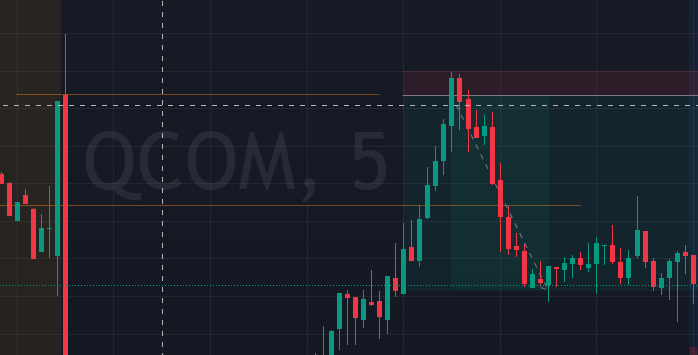
Stops are placed on the other side of the tail of the breakout, just a little past it.
Order Activations
Orders are set up but stay dormant until its clear 2 5m candles are formed and reversal candle is quickly approaching your level.
Golden Rules
- If there is no strong setup, do not trade.
- If you need revenge against a loss, do not trade.
- If you can't say: I'll be surprised if this doesn't work, do not trade.
- If you're chasing, do not trade.
- If you missed it, do not trade.
These aren't idle statements, these came from hundreds of trades taken. Don't fucking do it.
Volume Profile
I've not used any indicators aside from levels until adding Volume Profile. Which has proven to be invaluable.
Volume profile shows that reversals happen when volume dies down. So we only enter when volume starts to die down in combination with everything described above.
Homework & Preparation
Every single day preceding trading day trader will prepare by:
- Identifying key levels within the instrument with 2-point levels
- Extend previous levels if they are still relevant, leave older levels alone.
- This achieves clean charts without infinite level gradients.
- Extend previous levels if they are still relevant, leave older levels alone.
- Identify potential Market Mood & Direction
- What is current market direction?
- What is a significant upcoming/ongoing event that might be affecting market?
- Identify general instrument direction.
- Since this is intraday system, we don't care about any company specific events.

Morning of Trading Session
Trader wakes up around 7:00, agnostic. No expectations. React to market, don't predict it.
Completes any missing levels from the early sessions on the trading instruments list.
Then trader watches for high velocity moves, and their relationship to any pre-established levels, looking for entries.

Personal Demons
Problems that I am currently working on (bold are major):
- Entering on 1st 5m candle
- Trading garbage out of boredom (almost solved this one)
- Trading garbage on days I get massive returns from my mid-term swing trades (not day trades)
- Not waking up on time, and not drawing levels from pre-market data
- Not staying in excellent trades
- Especially after a loss when I exit too early to "make up for the loss"
- Entering weak setups (low velocity mainly)